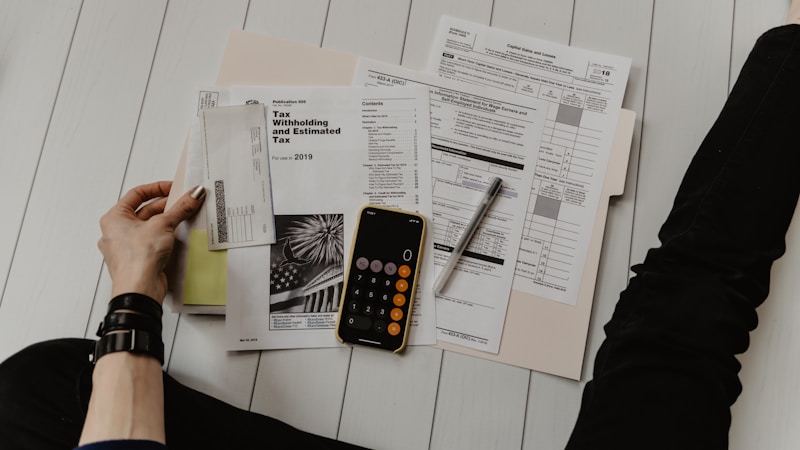
Busy all year. Crew running six days a week. And somehow, at the end of the season, the bank account doesn't show it.
That's not a work-ethic problem. It's a pricing problem — and it starts with the way almost every contractor learned to build a bid.
The problem: you price backwards
The standard method: add up costs, tack on "10 or 15 percent," and hope it holds. Profit is whatever's left over after everything goes wrong.
Profit-first bidding flips it. You decide what the job must pay you first — owner's pay, overhead recovery, real profit — and build the number up from there. Costs are inputs. Profit is a requirement, not a leftover.
Why the old way quietly bankrupts good builders
Markup and margin are not the same number, and confusing them is the most expensive mistake in the trades. A 15% markup is a 13% margin — before the forgotten dump fees, the unbilled supervision hours, and the change order you ate to keep the client happy. Run at a true 5% margin and one bad job erases twenty good ones.
Meanwhile the contractor across town who knows their numbers bids 12% higher than you, wins slightly fewer jobs, and takes home double.
What the playbook teaches (a preview)
Know your real overhead number. Chapter 2 walks you through finding your true cost per crew-day — most contractors who do this exercise discover they've been underpricing every job by $150-$400 a day without knowing it.
Price the risk, not just the work. Chapter 4 shows how to price uncertainty (occupied homes, unknown subsurface, tight schedules) as line items instead of eating them as surprises.
Present the number with a straight back. Chapter 6 gives you the exact language for defending a profitable price without apologizing for it.
All seven chapters are free to read online the moment you sign up — no PDF download hoops, no credit card.
Read the Profit-First Bidding Playbook free →What's inside the free ebook
- 7 chapters: the profit-first formula, your real overhead number, markup vs. margin, pricing risk, bid presentation, defending your price, and the follow-up system
- The crew-day cost worksheet that exposes underpricing in about 20 minutes
- Real bid teardowns showing where the money leaked
- Scripts for the "your price is high" conversation
"But..." — fair questions
"I've been pricing jobs for 20 years."
Then the worksheet in chapter 2 will take you 10 minutes and either confirm you're right or show you exactly where the leak is. Either answer is worth 10 minutes.
"If I raise prices I'll lose every bid."
You'll lose the bids that were losing you money. The playbook's whole point is winning fewer, better jobs — and chapter 6 shows how to make a higher number feel safer to the buyer than a lower one.
"What's the catch?"
The playbook is the free front end of the Bidroom Contractor Academy. If you want the full $97 course later, it's there. If you never buy it, the free chapters still fix your pricing.
Read it before you write your next number
Make profit a requirement, not a leftover
7 free chapters. Read online in an afternoon. No card required.
Get the free playbookNot sure pricing is your actual problem? Take the 2-minute What's Killing Your Bids? diagnostic first — it scores pricing, scope, and presentation separately. And run every finished bid through the free Winning Bid Checklist before it goes out.
P.S. Chapter 3 alone — markup vs. margin — has saved readers more than most paid courses. Start reading free.
Updated guidance for 2026
- Tariffs, Copper, and the 2026 Bid: How to Price Jobs When Materials Won't Sit Still Material prices moved more in the last 18 months than the previous five years. Here's how profitable contractors are wri
- What Renovations Actually Cost in 2026 (and the 3 Numbers Contractors Hope You Don't Check) Materials cooled, labor didn't, and tariffs reshuffled the whole price sheet. Here's what kitchens, baths, and ADUs real
What Would Your Project Cost?
Get an instant cost range for your ZIP code and see licensed contractors near you. Free, no signup required.
Get My Free EstimateGet contractor pricing for your area
Enter your email and we'll send you cost data and licensed contractor matches near you.