The contractor had 47 five-star reviews, a beautiful portfolio site, and a testimonial video. The homeowner sent a $22,000 deposit.
The reviews were AI-written, the portfolio photos belonged to a firm two states away, and the "testimonial" was a stock actor. In 2026, that entire fake identity costs about $200 and an afternoon to build.
The problem: the signals you were taught to check are now the easiest to fake
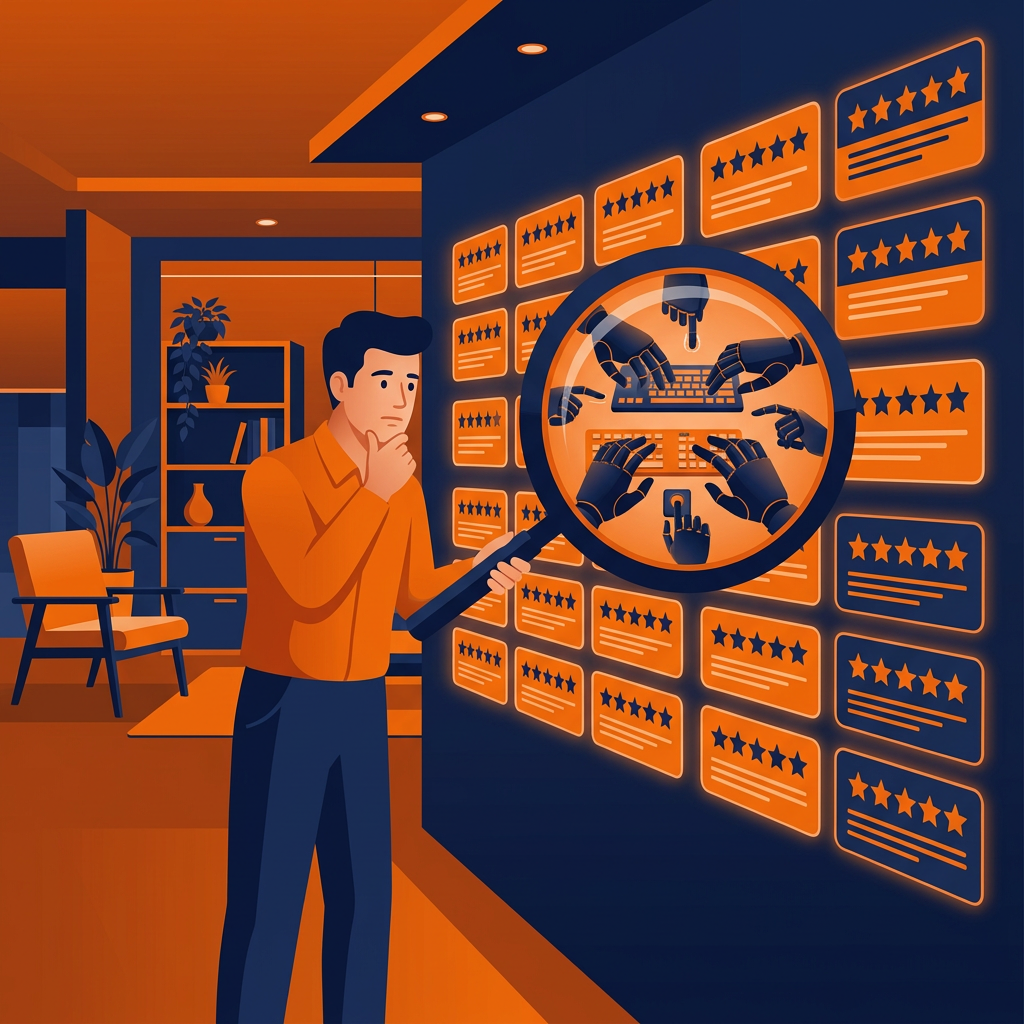
For a decade, the advice was "read the reviews, check the website, look at the portfolio." That advice is now obsolete — those are precisely the three things generative tools fake best. Review platforms are purging millions of AI-written reviews a year and openly losing the race. A cloned portfolio site takes an hour. A fake before-and-after gallery takes a prompt.
Meanwhile the checks that actually work — the boring, bureaucratic ones — haven't changed at all. Scammers skip them because they can't fake them.
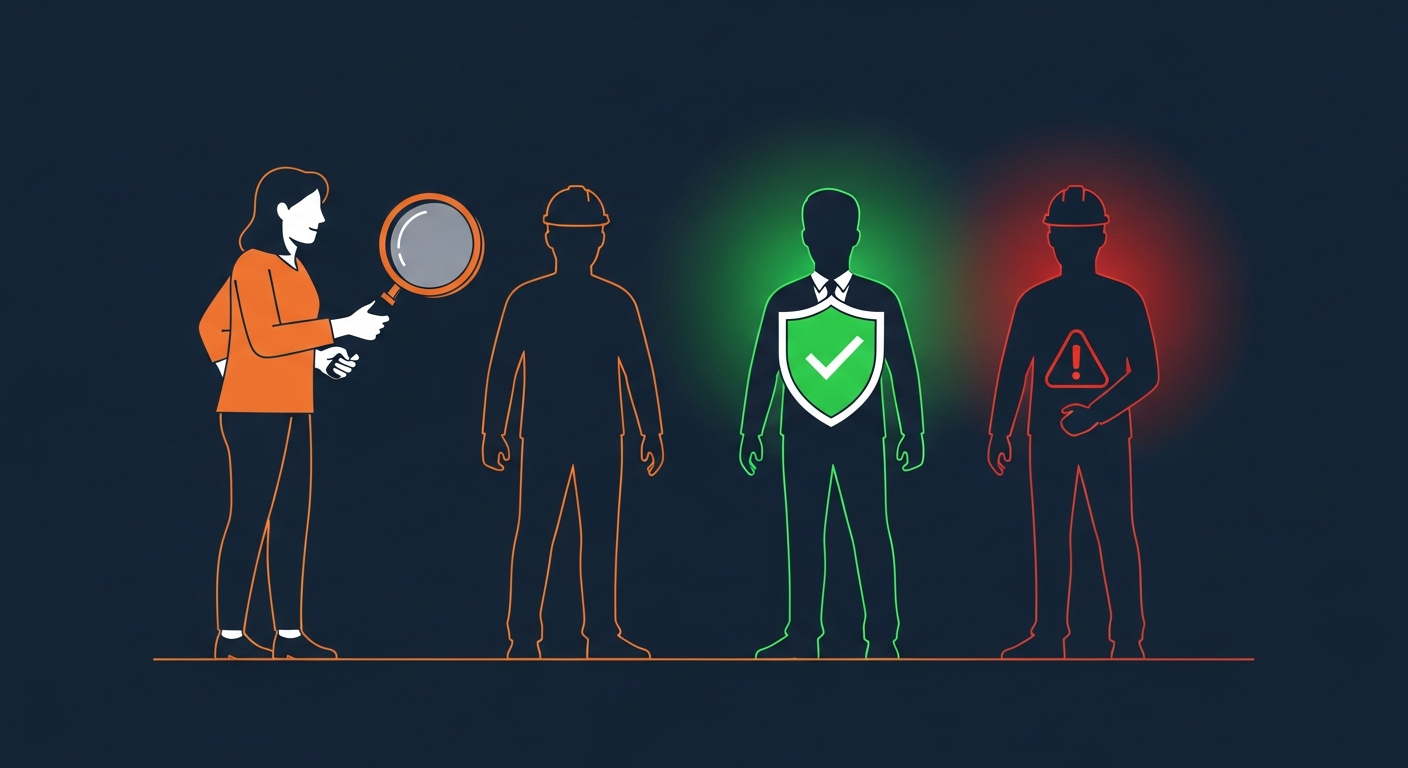
The four tells of a machine-generated reputation
1. Review clustering. Forty reviews in eight months, then silence — or a burst of ten in two weeks. Real reputations accrete unevenly over years.
2. Reviewer profiles with one review. Click the reviewers. Real people review restaurants and mechanics too. Burner profiles review one contractor and vanish.
3. Portfolio photos that reverse-search elsewhere. Right-click, search the image. Ninety seconds. You'd be amazed how often the "recent kitchen in your area" lives on another company's site.
4. Perfect grammar, zero specifics. AI reviews praise "professionalism and communication." Real clients mention the dog gate, the Tuesday rain delay, the tile guy named Marco.
The 10 checks that can't be faked — license, insurance, lien history, and the rest — on one free printable checklist. Twenty minutes, done before you sign.
Get the free Vetting Checklist →The checks AI can't fake
A state license lookup is a government database query — no language model can insert a contractor into it. A certificate of insurance emailed directly from the agent can't be prompted into existence. A lien and court-record search reflects what actually happened on real jobs. References you call and question — "would you hire him again for a bigger job?" — still produce that telling pause no AI can script.
This is also why Bidroom verifies licenses on contractor directory profiles instead of letting anyone claim anything — the boring checks, done for you, before the first conversation.
What's inside the free checklist
- All 10 unfakeable checks, with exactly where to look and what disqualifies
- The reverse-image search routine for portfolios (90 seconds per contractor)
- The public lien and court search most homeowners don't know exists
- The deposit rule that would have saved the homeowner in the first paragraph $22,000
"But…"
"I don't have time to investigate every contractor."
You investigate one — the finalist. Twenty minutes, after the bids are in, before the signature. It's the cheapest insurance in home improvement.
"Surely most reviews are still real."
Most, yes. But scam operations concentrate exactly where the money is — deposit-heavy remodels — and they look better online than honest contractors, because polish is their whole product.
"Is the checklist really free?"
Yes — email-gated, printable, no card. There's an optional paid Protection Kit behind it with contract templates; the checklist works on its own.
Budgeting first? Start with what renovations actually cost in 2026, then vet whoever bids it.
Vet like it's 2026, not 2016
The 10 checks no AI can fake — free printable checklist, 20 minutes to run.
Get the free checklistP.S. The fake-review economy targets exactly one kind of homeowner: the one who only reads reviews. Be the other kind.
What Would Your Project Cost?
Get an instant cost range for your ZIP code and see licensed contractors near you. Free, no signup required.
Get My Free EstimateGet contractor pricing for your area
Enter your email and we'll send you cost data and licensed contractor matches near you.