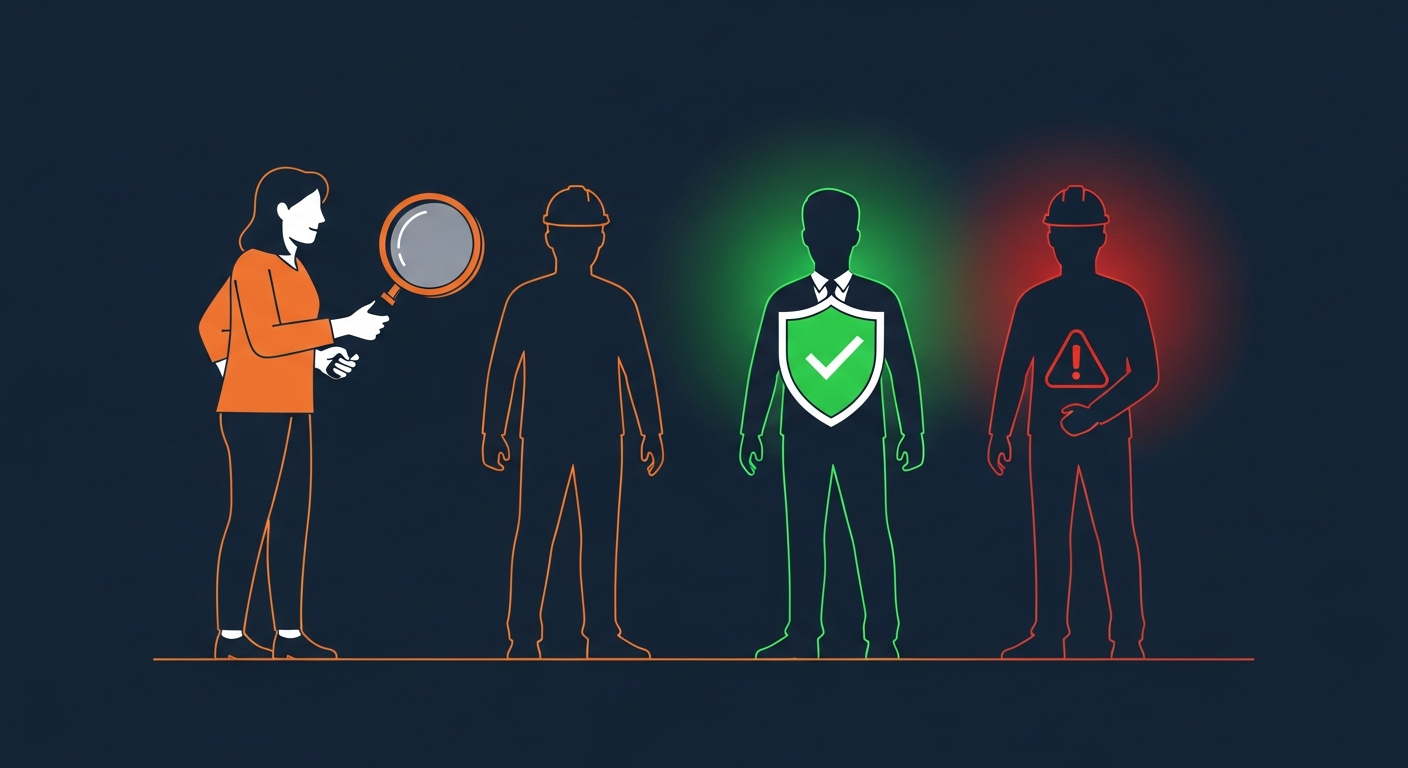
Every homeowner with a contractor horror story says the same thing afterward: "He seemed great. He was so nice at the walkthrough."
Of course he was. Being likable at the walkthrough is the one skill every bad contractor has mastered — it's how they stay in business. The handshake test filters out nobody.
The problem: you're vetting personality, not paperwork
When the biggest purchase of your year is on the line, most of the actual decision gets made on vibes: he showed up on time, he had strong opinions about tile, the quote looked professional. None of that predicts whether he's licensed, insured, solvent, or in the habit of finishing what he starts.
The signals that do predict it are all checkable in about 20 minutes — if you know the ten places to look.
What a bad hire actually costs
The catastrophic version — abandoned job, lien on your house, lawsuit — makes the news. The common version is quieter: a project that runs 40% over budget through change orders, drags three months past the promise, and ends in a standoff over a punch list. On a $75,000 renovation, "quietly bad" routinely costs $20,000-$30,000 and a year of your patience.
Three of the ten checks, free right now
1. Verify the license against the state board — not the number on his card. Look it up yourself. Check that it's active, matches his business name, and covers your project type. Ten percent of the time, this check alone ends the conversation.
2. Call the insurance agent, not the contractor. Ask for a certificate of insurance sent directly from the agent. A real contractor's agent does this weekly. Excuses here are a full stop.
3. Ask references the one question that matters: "Would you hire him again for a bigger job?" Anyone can produce three happy names. The pause before the answer tells you everything the words won't.
All ten checks — including the lien search, the payment-schedule test, and the contract must-haves — on one free printable checklist.
Get the free Vetting Checklist →What's inside the free checklist
- All 10 checks with exactly where to look and what disqualifies
- The lien and court-record search most homeowners don't know is public
- The payment-schedule rule that keeps you in control (and the deposit number that should send you running)
- A print-and-bring version for the walkthrough, so the questions get asked while it's easy
"But..." — what homeowners tell us
"Won't a good contractor be offended?"
The opposite. Legitimate pros love vetted clients — it means they're not competing against the unlicensed guy who's 30% cheaper. Anyone offended by a license check just failed it.
"I found him through a friend, so he's fine."
Referrals are a great place to start and a terrible place to stop. Your friend's deck is not your kitchen, and half of the horror stories start with "a friend recommended him."
"Why is the checklist free? What do you get?"
Bidroom is where vetted contractors and serious homeowners meet. Teaching you to vet properly makes you exactly the kind of homeowner the platform works for. No card, no catch — the checklist is yours either way.
Twenty minutes now, or a year of regret later
Run the 10 checks before you sign
Free printable checklist. 20 minutes of checking. No card required.
Get the free checklistNot sure what the project should cost in the first place? Get an instant estimate before you collect quotes. And for the full hiring playbook — contracts, payments, red flags — read the free Hire Right guide.
P.S. Check 7 — the deposit rule — has stopped more disasters than the other nine combined. See it free.
Updated guidance for 2026
- AI Wrote That 5-Star Review: How to Vet a Contractor in 2026 When You Can't Trust the Internet Fake reviews, cloned websites, AI-polished portfolios — the 2026 contractor scam kit is machine-generated. The 10 checks
- What Renovations Actually Cost in 2026 (and the 3 Numbers Contractors Hope You Don't Check) Materials cooled, labor didn't, and tariffs reshuffled the whole price sheet. Here's what kitchens, baths, and ADUs real
What Would Your Project Cost?
Get an instant cost range for your ZIP code and see licensed contractors near you. Free, no signup required.
Get My Free EstimateGet contractor pricing for your area
Enter your email and we'll send you cost data and licensed contractor matches near you.